Lavrio: The Industrial Heritage and Hidden Gem of Attica
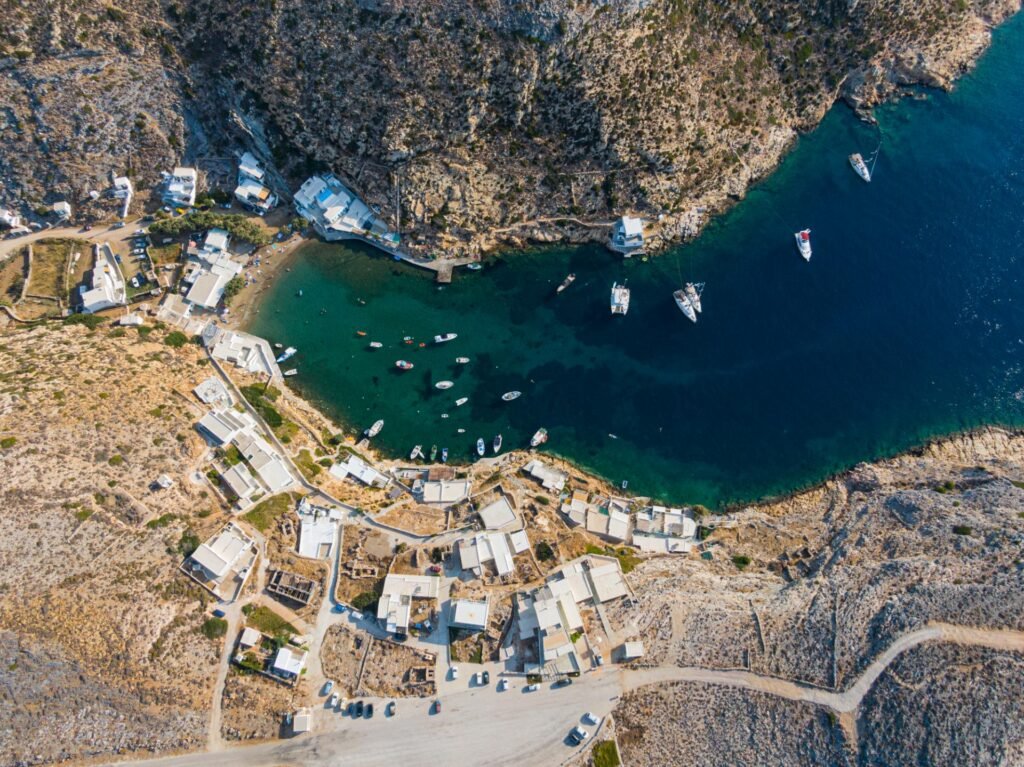
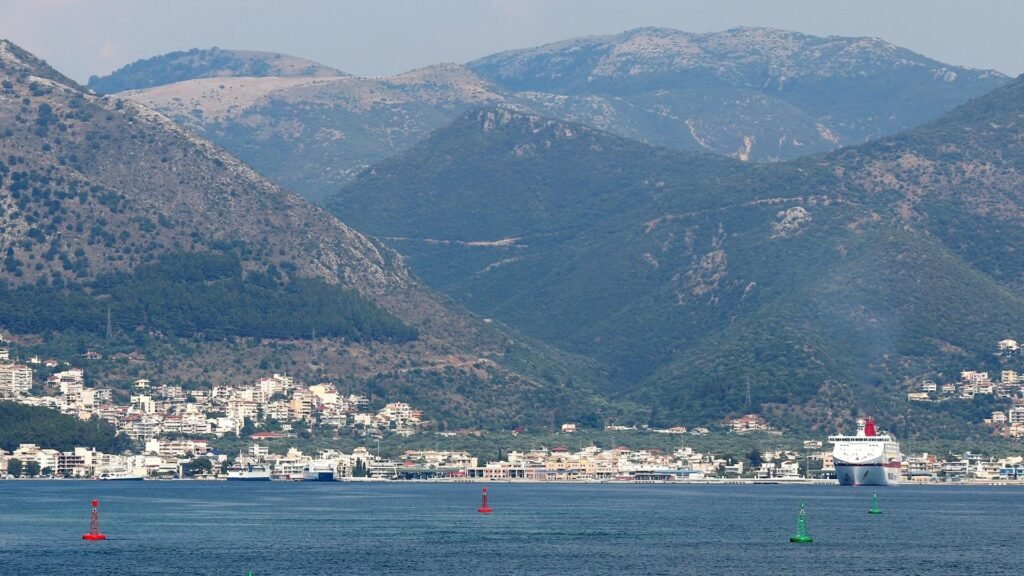
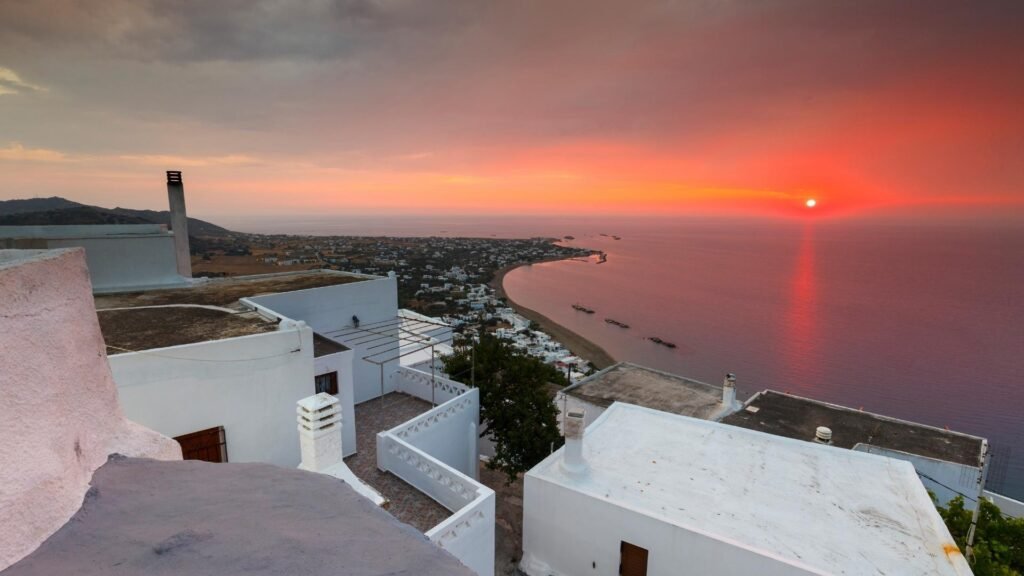
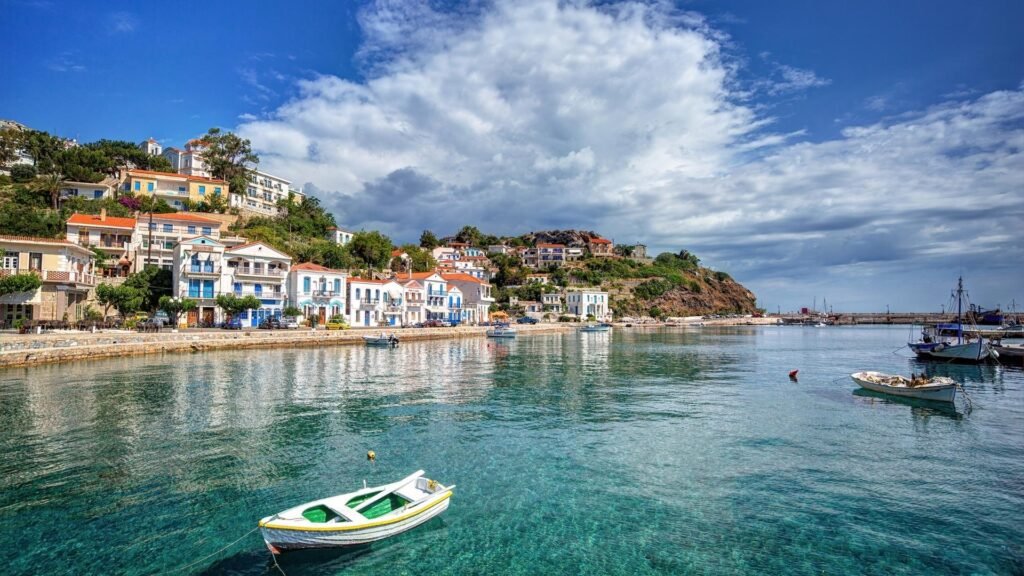
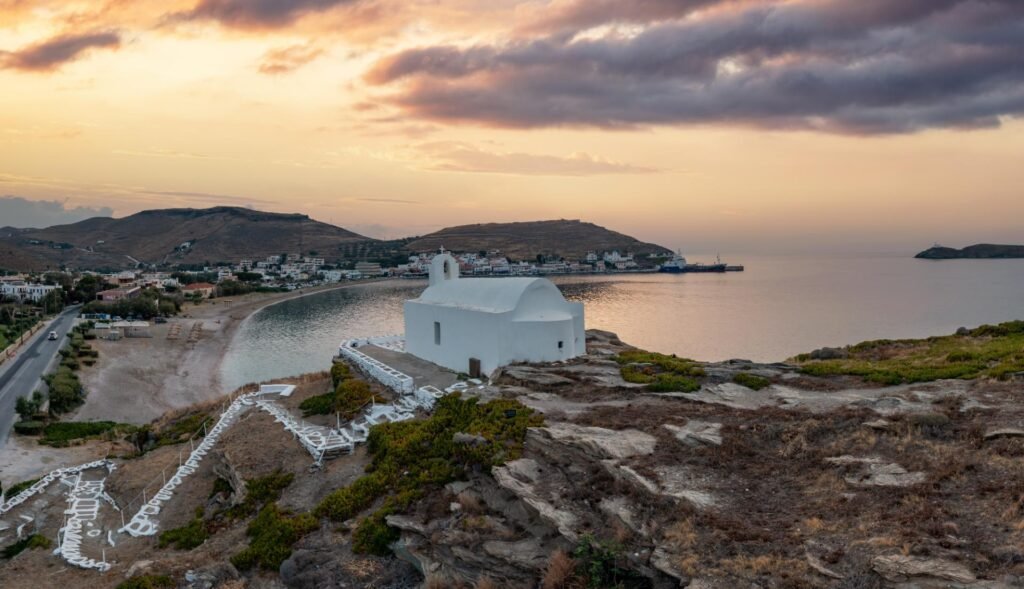
Lavrio (or Laurion) is often the forgotten port of Athens, yet it is one of the most culturally significant towns in Greece. Located at the southeastern tip of Attica, Lavrio was the engine of ancient Athens, providing the silver that funded the Athenian navy and the building of the Acropolis. Today, it is a revitalized port town that serves as the gateway to the hidden gems of the Western Cyclades.
Things to know about Lavrio
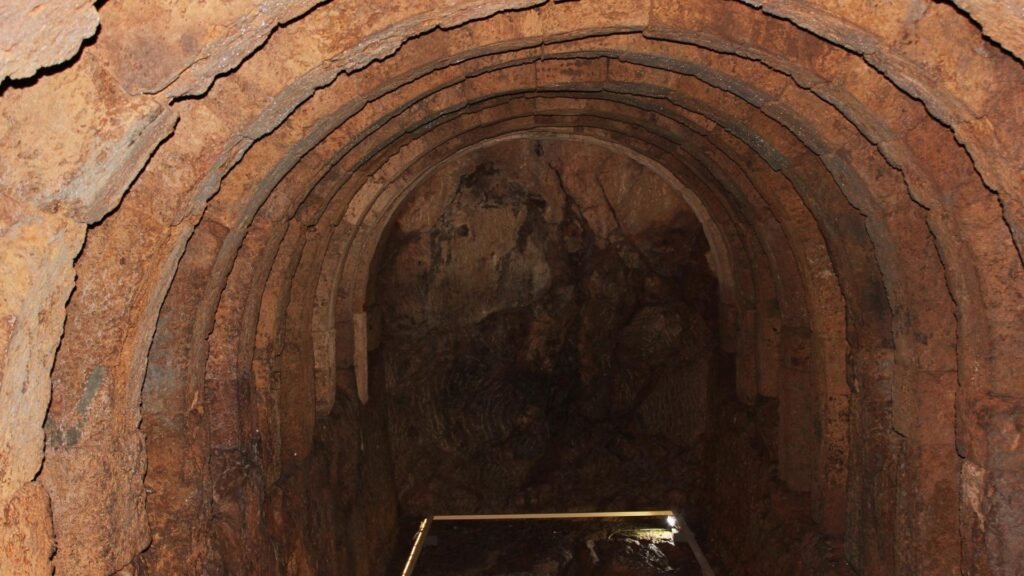
Lavrio is home to the oldest and largest ancient silver mines in Europe. Geographically, it sits near Cape Sounion. Historically, the town was the site of a massive industrial boom in the 19th century, which is evident in its grand neoclassical buildings and industrial architecture. An ideal trip length is 1-2 days to see the mines and the Temple of Poseidon. It is famous for its mineral wealth and as the closest port to the islands of Kea and Kythnos.
Top attractions in Lavrio
Technological Cultural Park of Lavrio
Housed in the former French Mining Company building, this park is a stunning example of industrial archaeology. It hosts museums and cultural events that showcase the 19th-century machinery and the harsh but fascinating life of the miners.
Ancient Theater of Thorikos
Located just outside the town, this is one of the oldest theaters in Greece. It is unique because of its elliptical (not circular) shape and its location right next to ancient mining shafts, offering a hauntingly beautiful perspective on ancient life.
Mineralogical Museum of Lavrio
Lavrio is a paradise for geologists. This museum contains rare and beautiful minerals found nowhere else in the world. It is a must-visit for anyone interested in the natural history of the Aegean.
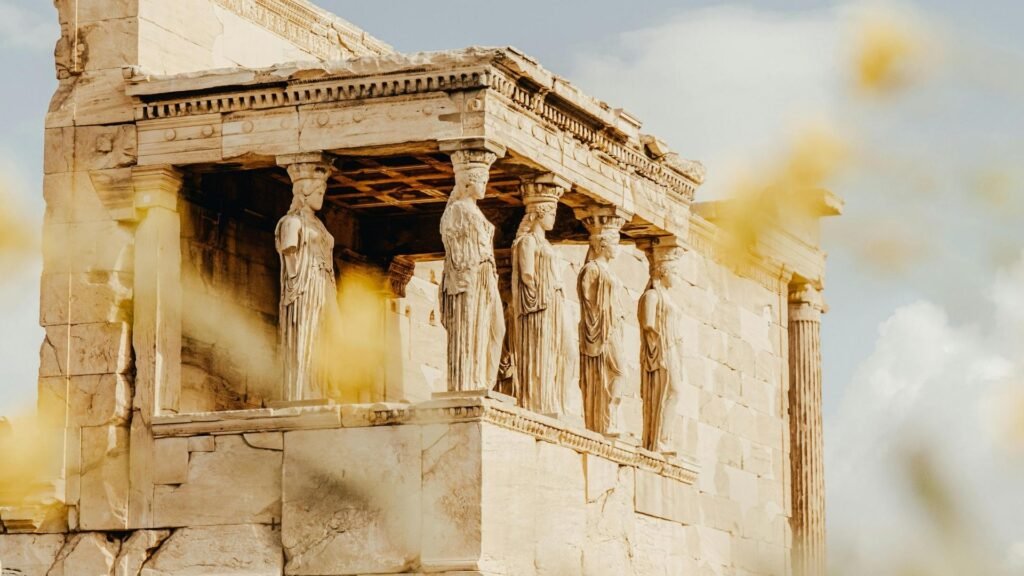
The Temple of Poseidon at Sounion
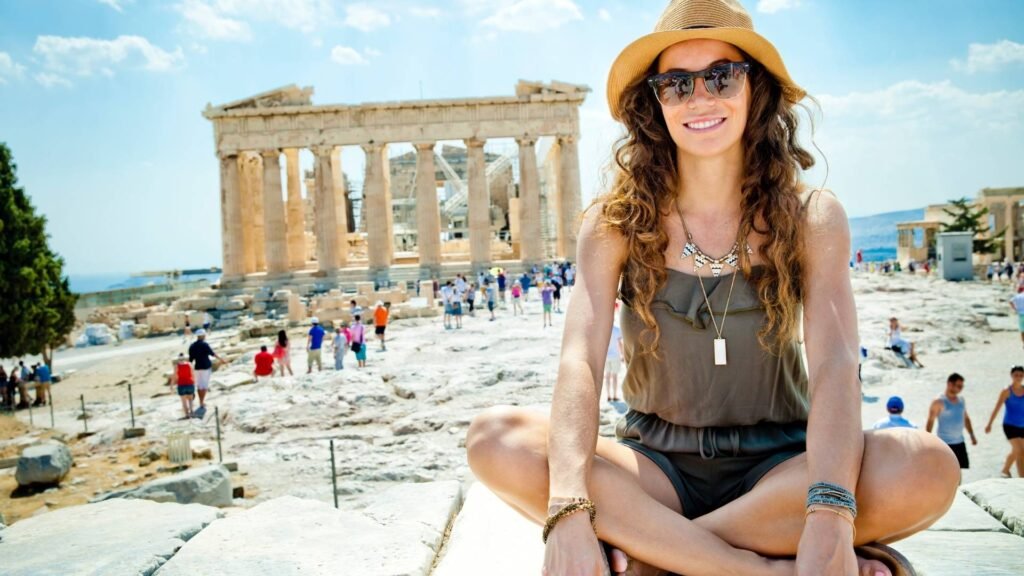
Only 10 minutes from the port, this is one of the most famous sites in Greece. The marble columns of Poseidon’s temple stand on a sheer cliff 60 meters above the sea. The sunsets here are legendary and are considered among the best in the world.
The Palm Tree Forest
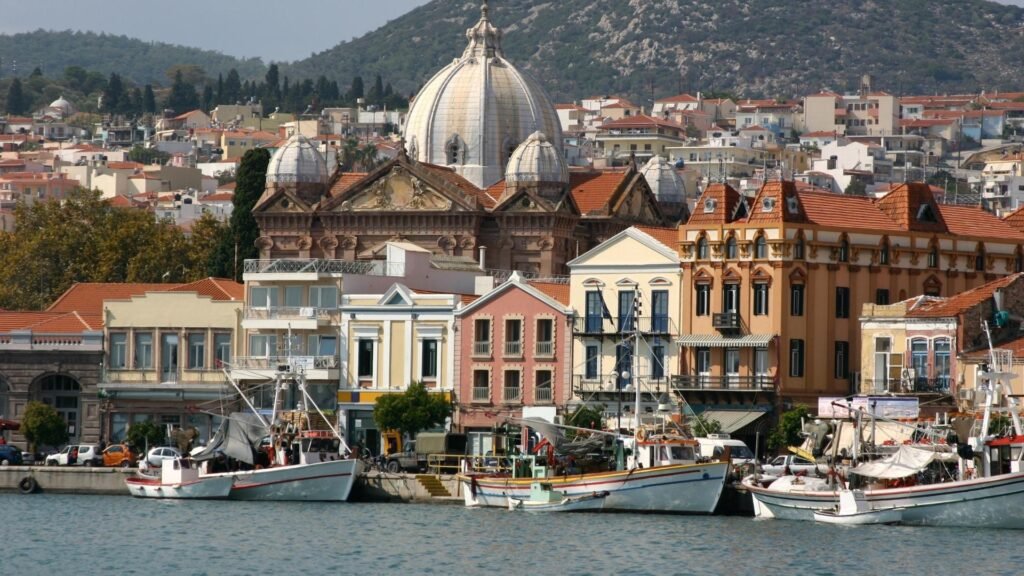
A small, unexpected oasis in the center of the town, this forest of palm trees was planted during the 19th-century mining era and provides a beautiful, tropical feel to the neoclassical town square.
Lavrio Fish Market
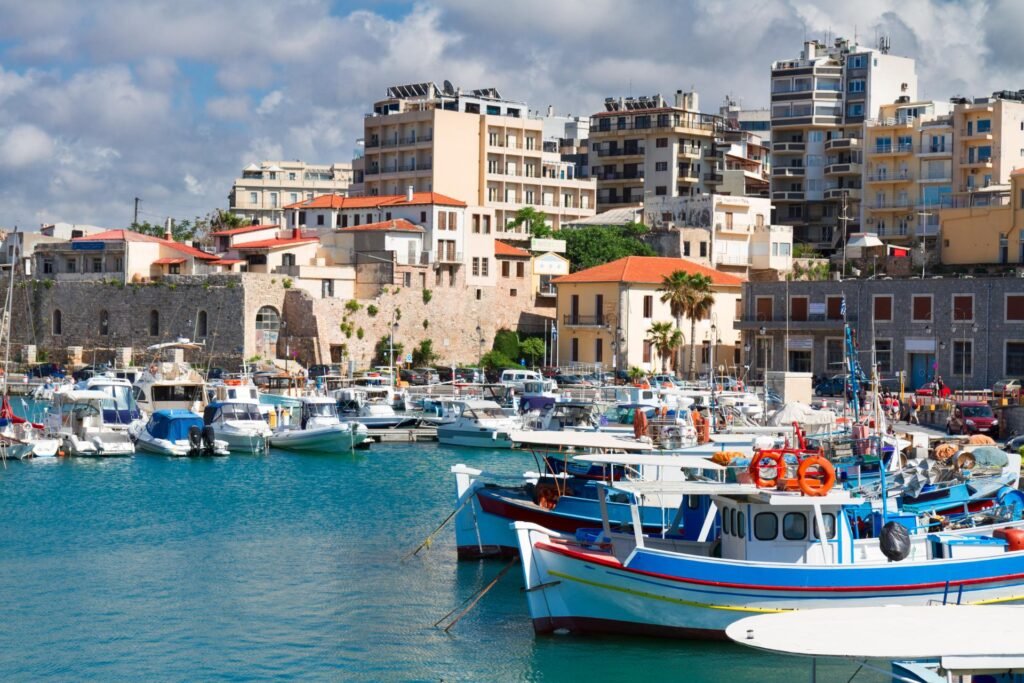
Similar to Rafina, the market here is central to local life. It is housed in a beautiful historic building and is surrounded by small ‘mezedopoleia’ where you can taste local delicacies like sundried octopus.
The Giant Crater (Chaos)
Located in the Sounion National Park, this is a massive, circular heart-shaped crater. Local legends say it was caused by a meteor, but geologists believe it is a collapsed cave roof. It is a popular spot for hiking and photography.
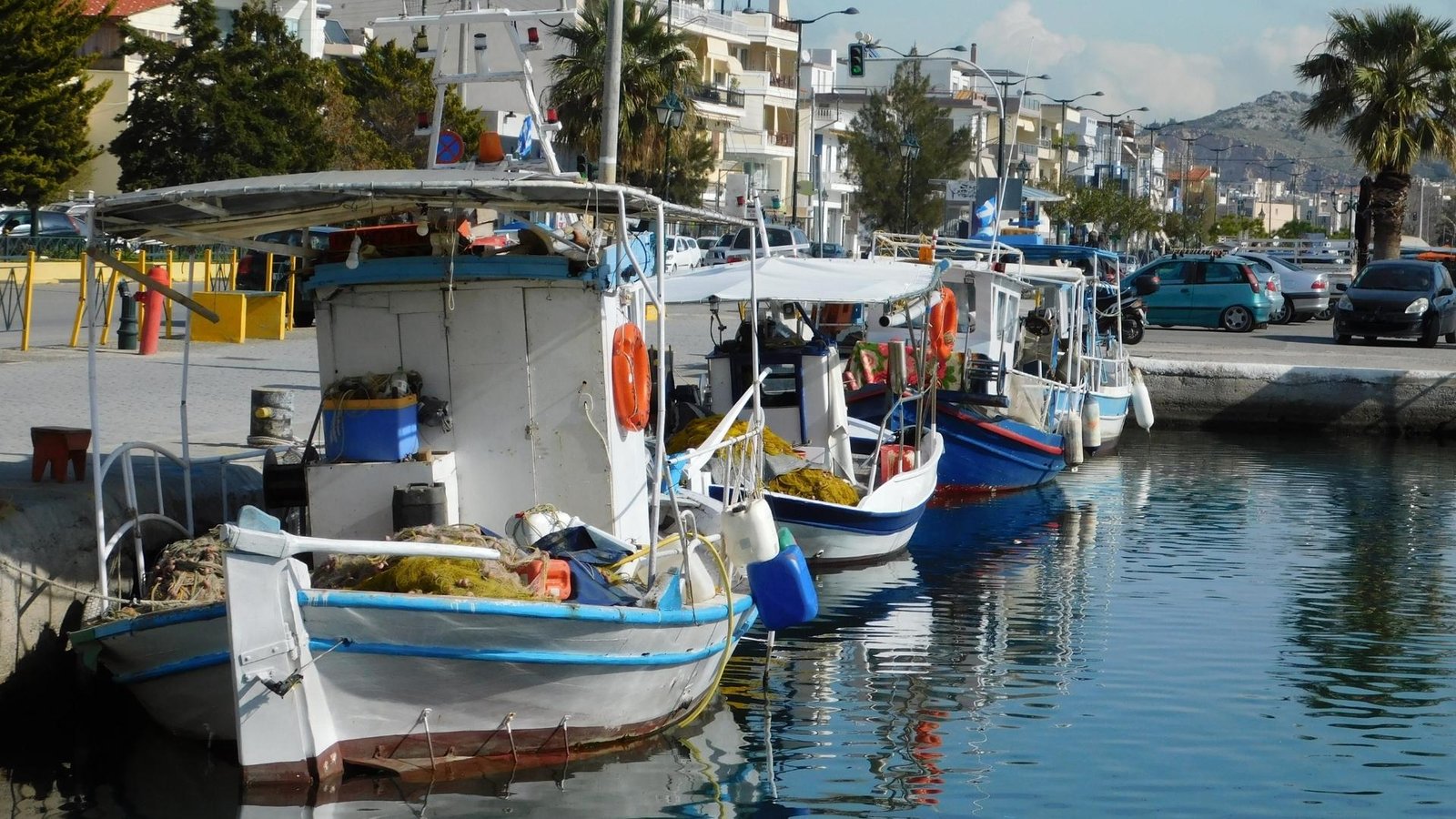
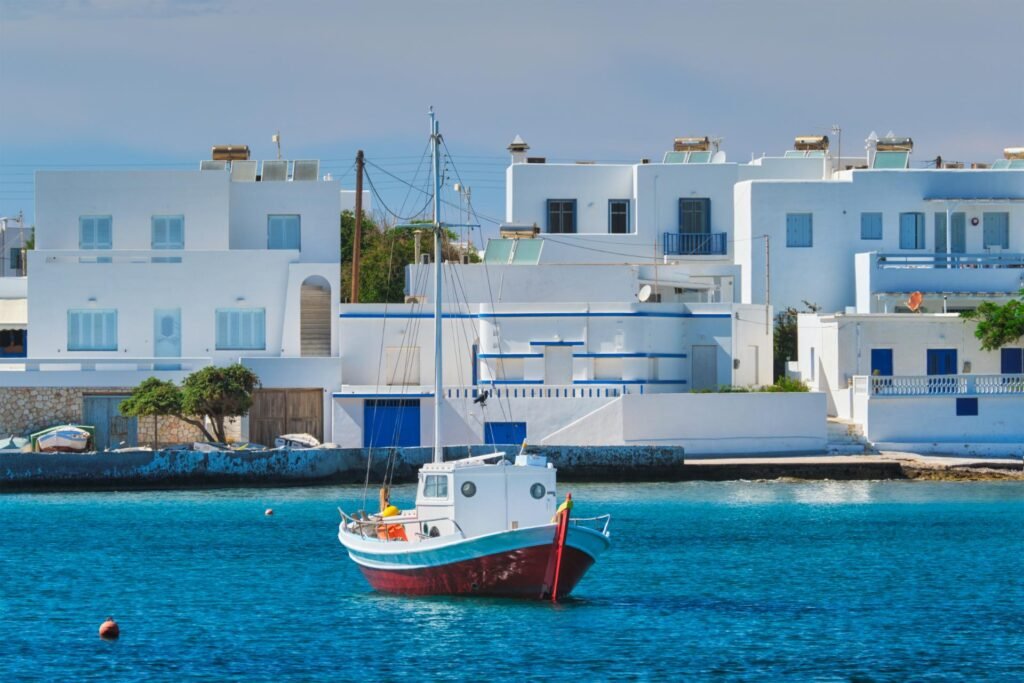
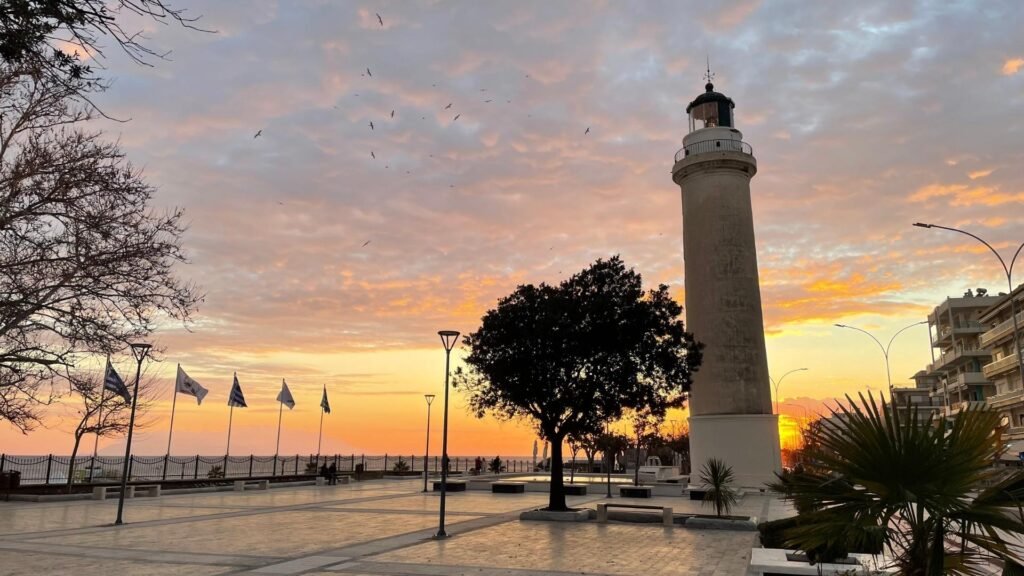
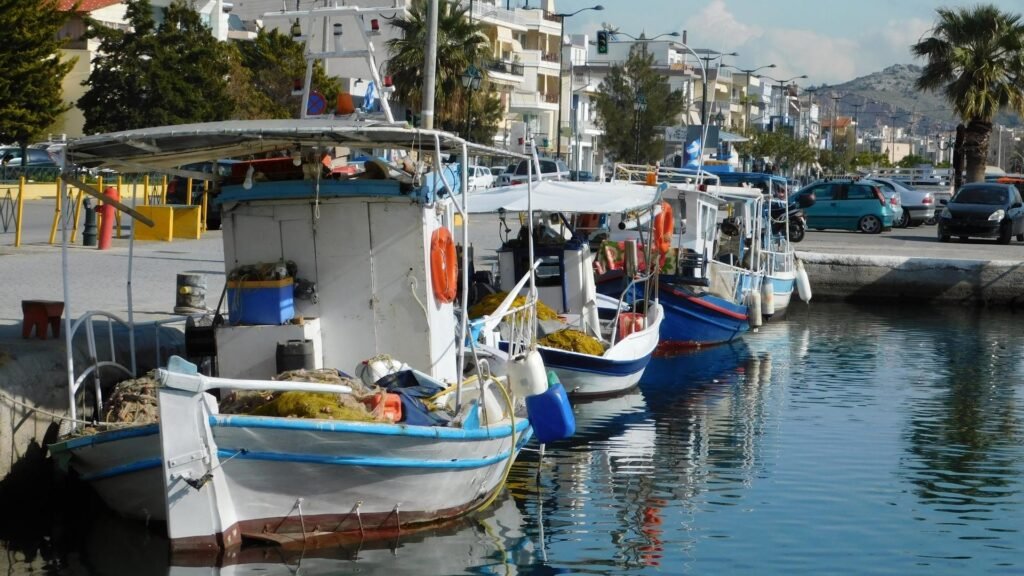
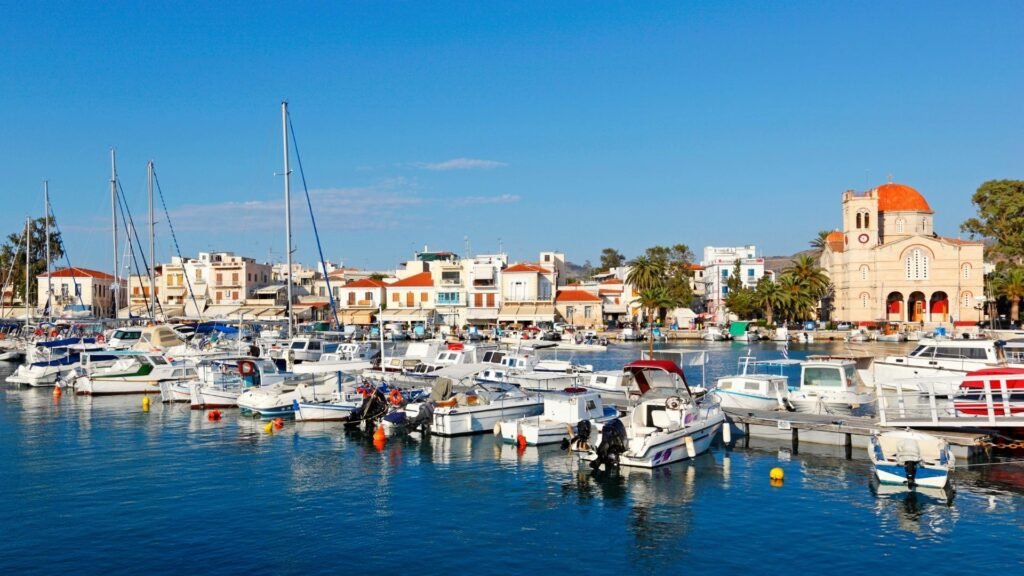
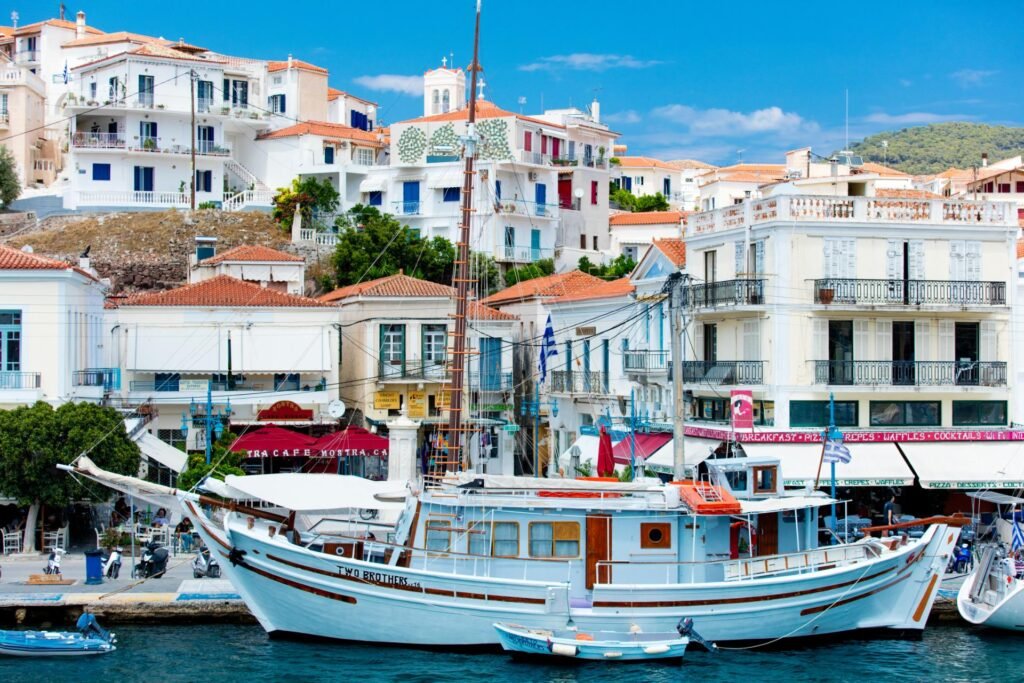
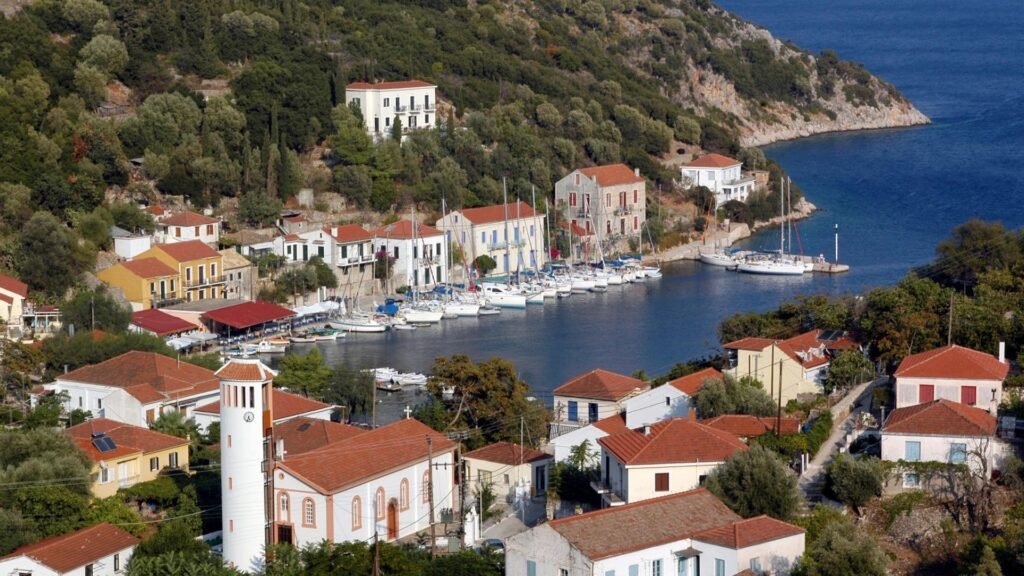
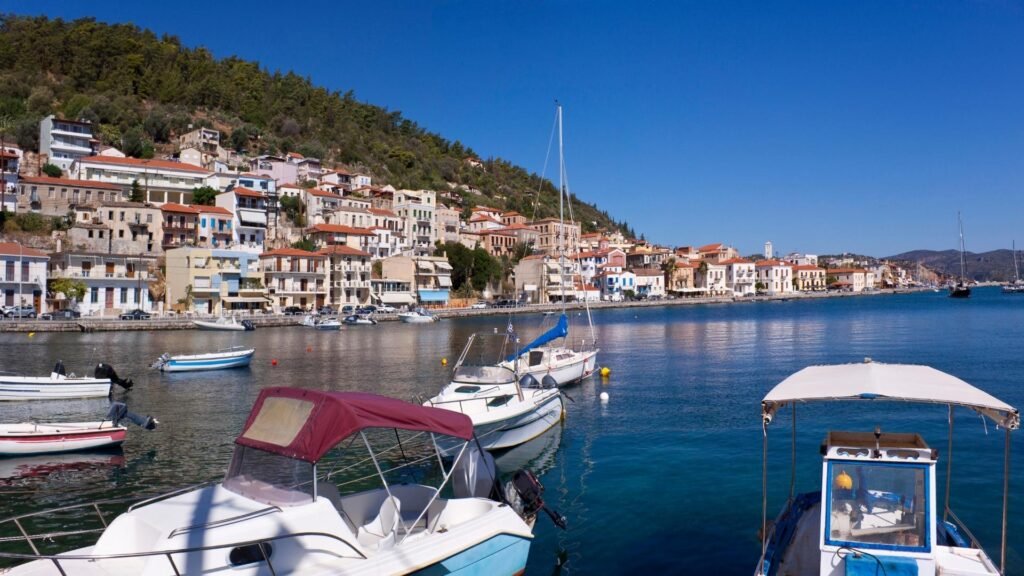
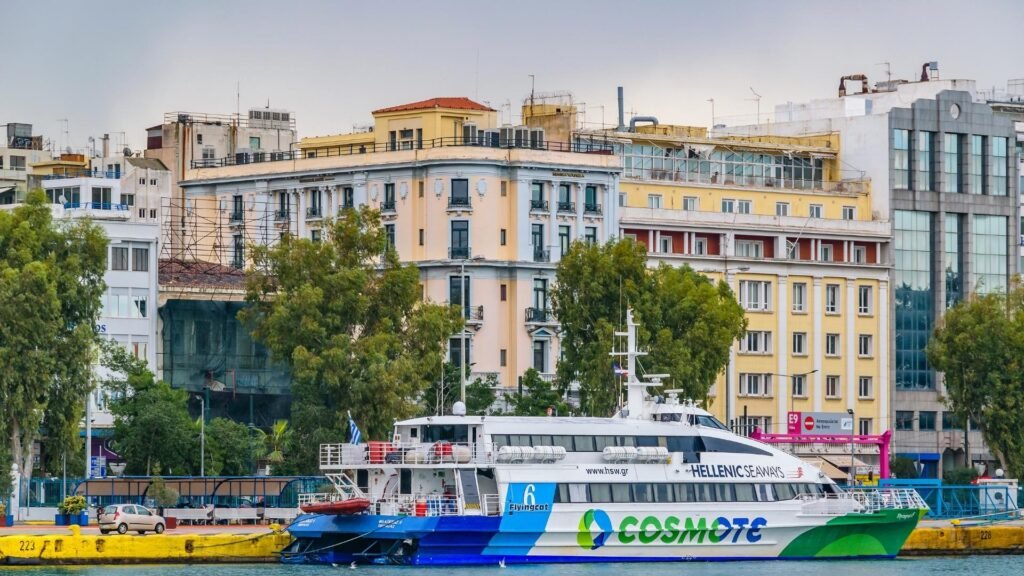
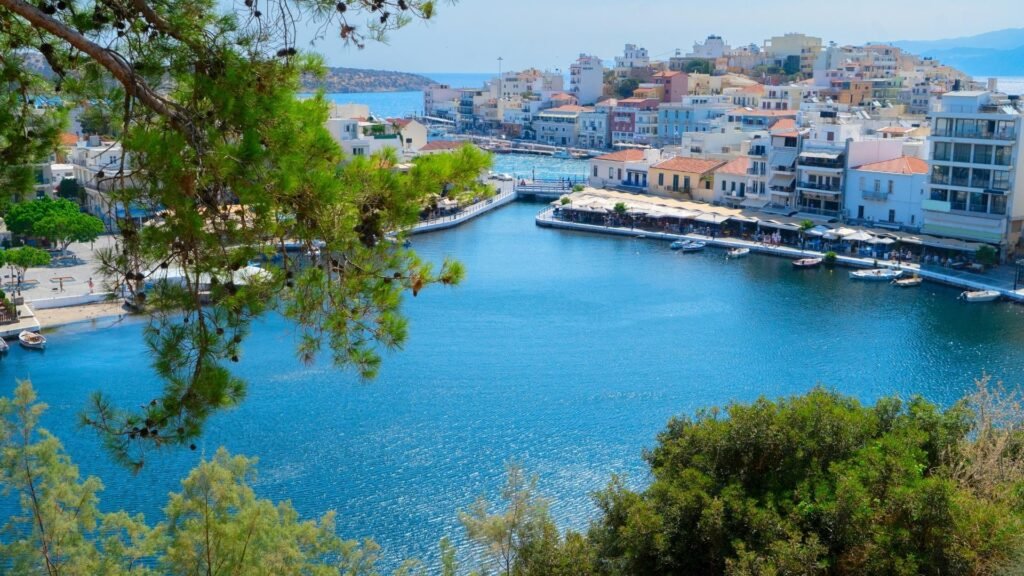
Port of Lavrio Waterfront
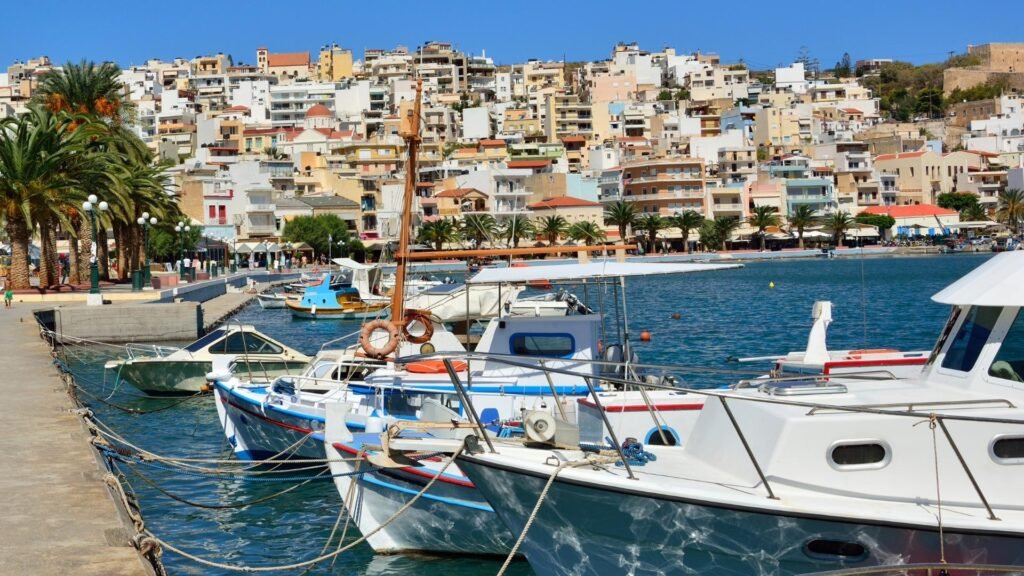
The recently renovated waterfront is perfect for a late-afternoon stroll. It is lined with cafes and bars that are much more affordable and authentic than those found in central Athens.
Sounion National Park
Beyond the temple, the park offers numerous hiking trails that wind through ancient silver mines, ruined washing tanks, and rare Mediterranean flora, offering a unique mix of nature and history.
The French Wharf
A landmark of the industrial era, this iron wharf was used to load silver and lead onto ships. It remains a powerful symbol of Lavrio’s maritime and industrial past.
Island-hopping from Lavrio
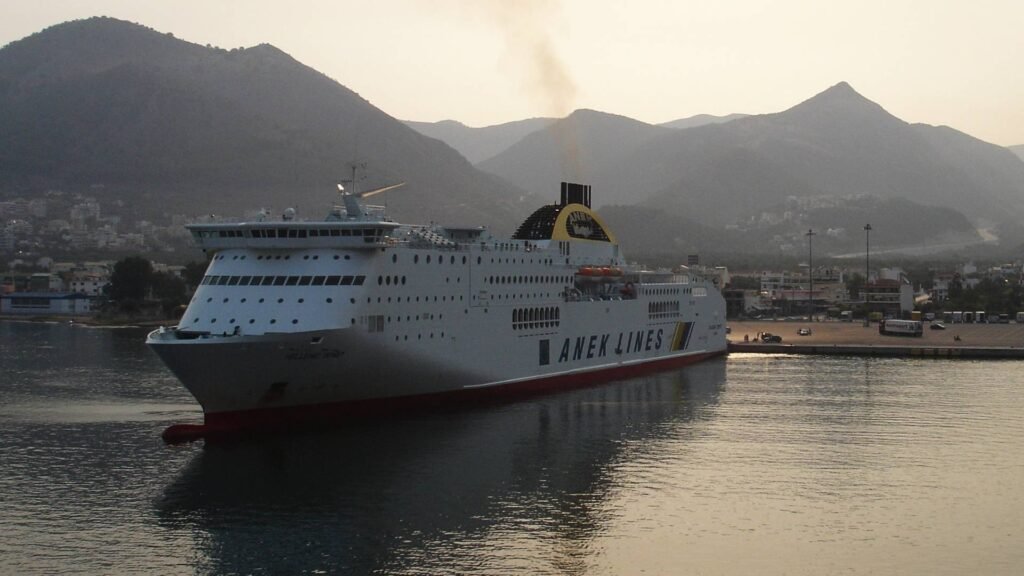
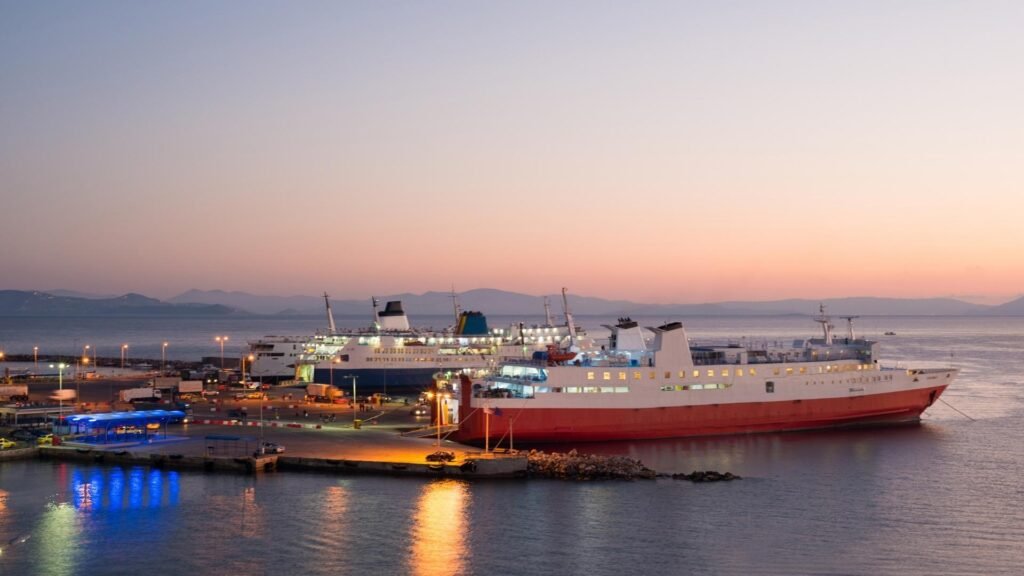
Lavrio is the primary departure point for Kea (Tzia) and Kythnos. The ferry to Kea takes only 60 minutes, making it the fastest island escape from the mainland. It also serves as a secondary hub for the Western Cyclades (Serifos, Sifnos, Milos) and provides a unique long-distance ferry connection to the North Aegean islands like Lemnos and Agios Efstratios.